

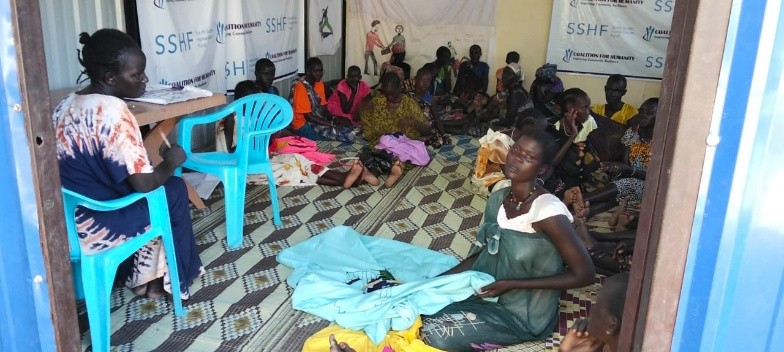
Image 1: Mary Nyajal Both (left), a survivor of gender-based violence from Toch Payam, Fangak County, South Sudan, participating in a group psychosocial support activity at the CH-supported Women and Girls Friendly Centre in Toch.
For years, the sound of raised voices and violence filled Mary Nyajal Both’s home. Her children watched in silence as their mother endured beatings, insults, and humiliation. The home that should have been a place of comfort had become a place of fear.
Mary, a 29-year-old mother of five, was married at the age of 16. Like many young women in Fangak County, Jonglei State, South Sudan, she had little say in the decision. Her husband was much older than her, and the marriage was not one she chose for herself. After getting married, her following years were marked by abuse and control. “I was repeatedly beaten by my husband in front of my children,” Mary recalls. “He insulted me and made me feel worthless. I lived in fear every day. Sometimes I thought he would kill me.” The violence affected every aspect of her life. Beyond the physical injuries, it made her feel isolated and powerless. Sometimes she believed there was nowhere to turn and no one who would listen. Her experience reflects the reality faced by many women and girls in conflict-affected communities across Fangak County. Displacement, insecurity, and economic hardship often increase the risks of gender-based violence. For survivors, seeking help can be difficult because of stigma, fear, and the absence of support systems.
Mary’s life began to change when members of a Community-Based Protection Committee identified her situation and referred her to an emergency Gender-Based Violence (GBV) response and prevention programme implemented by Coalition for Humanity (CH). At the women- and girls-friendly centre, Mary was welcomed by CH caseworkers, who documented her case using a survivor-centred case management approach. She was enrolled in regular psychosocial support services, including individual counselling and group sessions. Through these interventions, she gradually began to share her experiences and process the pain she had endured for so long. “Before I came to the centre, I was often so stressed that I could not properly care for my children,” Mary says. “Now I feel strong. Since coming to this place, I feel happy because there are people who stand with me. I am so happy to know that there are people in our community who support women who have experienced violence.”
The initiative that supported Mary, along with many other women facing similar challenges, was part of a six-month project implemented by Coalition for Humanity (CH) and funded by the South Sudan Humanitarian Fund (SSHF). The project aimed to provide frontline health services, protection assistance, and emergency shelter and non-food items (NFIs) to crisis-affected populations in Mayendit, Leer, and Fangak Counties, in South Sudan. The protection component of the project sought to safeguard people’s safety, dignity, and human rights in the most challenging humanitarian contexts. It delivered a range of services, including support for survivors of gender-based violence, child protection case management, and community-based awareness and engagement activities. The project established and strengthened Women and Girls Friendly Spaces, providing safe environments where women and girls could access support services, share their experiences, and begin their recovery journey. In addition, it strengthened community-based structures to identify protection risks, raise awareness, and support referral pathways for individuals requiring assistance.
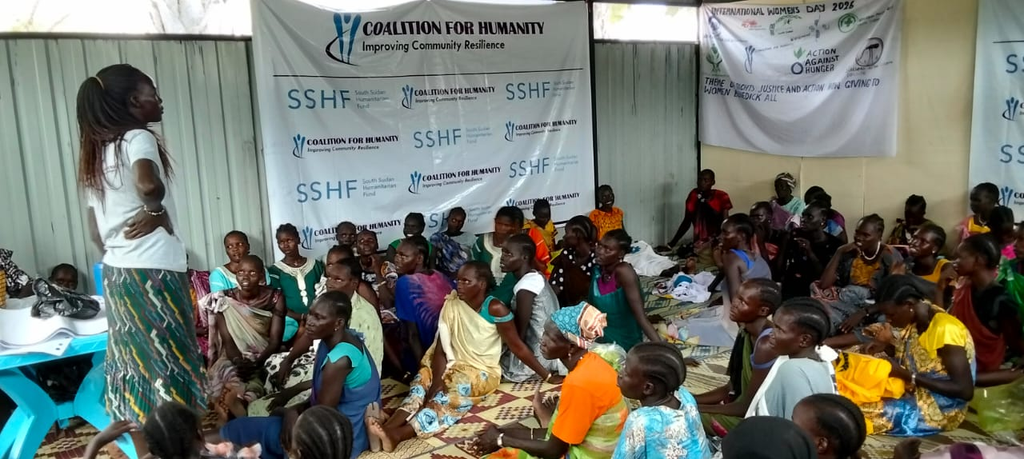
Image 2: Women and girls at the Women and Girls Friendly Space in Toch Payam, Fangak County participate in group PSS activities.
As Mary continued participating in activities at the Women and Girls Friendly Space, she began to notice changes not only in herself but also within the wider community. Awareness sessions conducted through the project encouraged discussions about gender-based violence and the importance of protecting women and girls. Community members began paying closer attention to issues that had often been overlooked or ignored. “It feels like men are now paying attention to our voices, concerns, and safety,” she says.
At the centre, Mary also learned new skills in knitting and embroidery. These activities formed part of the group psychosocial support sessions, where women taught and supported one another while engaging in practical activities. Mary planned to use her newly acquired skills to start a small knitting and embroidery business, which would enable her to earn an income and support her children.
Mary’s journey demonstrated that recovery from violence was possible when survivors had access to timely support, safe spaces, and caring communities. Although the challenges facing women and girls in Fangak County remained significant, stories like Mary’s showed that change was possible when communities and humanitarian actors worked together to protect and empower those at risk.